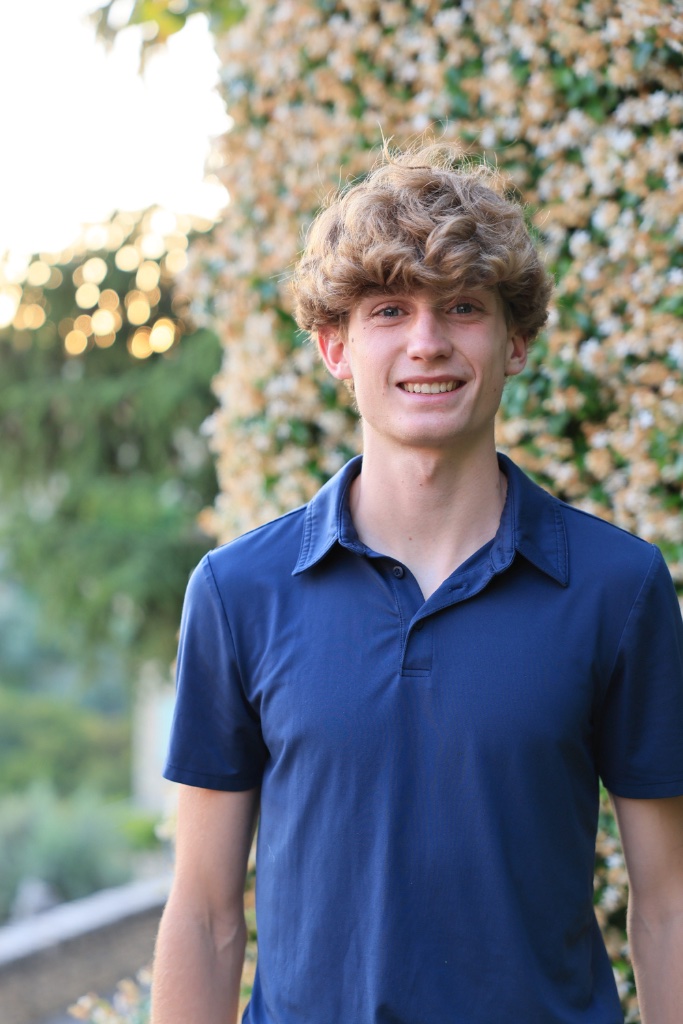
I’ve been working on my personal brand for a while now, but recently I got some advice from Dylan Haugen that completely changed how I think about it.
I’ve been following Dylan’s work around dunking, content, digital marketing, SEO, and personal branding, so I reached out to him for advice on what I should be doing with my own brand.
His response was much bigger than just, “Post more.”
The main idea was to build an actual ecosystem around my personal brand.
Your Social Media Shouldn’t Be the Hub
One of the biggest things Dylan explained to me was that social media shouldn’t be the foundation of your personal brand.
It’s part of it.
But it shouldn’t be the entire thing.
His own strategy evolved over time. He started primarily with YouTube, expanded into other social platforms, and eventually built websites and other digital assets around his content.
The idea is pretty simple:
Your content lives everywhere, but your personal website is the hub that connects everything.
That was a big realization for me.
I’ve always thought of my website as somewhere people could go if they wanted to learn more about me.
Now I see it as something much bigger.
It’s the central entity that connects everything I’m doing.
YouTube Is Still Important
Dylan explained that YouTube remains a major part of his strategy because it provides something most other platforms don’t:
A home for long-form content.
Short-form content can be posted almost anywhere.
TikTok.
Instagram.
YouTube Shorts.
Snapchat.
But long-form content has a different purpose.
You can actually tell a story, teach something, document a process, or build a deeper connection with someone.
That’s why his content strategy isn’t just one platform.
He takes the longer-form content and then uses shorter clips to distribute that content across other platforms.
That’s something I want to start implementing with my own content.
Instead of thinking:
“What should I post on Instagram?”
“What should I post on YouTube?”
“What should I post on LinkedIn?”
I can start thinking:
“What am I creating, and how can I distribute it everywhere?”
One piece of content can become a YouTube video, several Shorts, an Instagram Reel, a TikTok, a LinkedIn post, and eventually even an article on my website.
That makes the content much more valuable.
Dunking Is Part of My Personal Brand
This is where the advice gets especially interesting for me.
Dunking isn’t just something I do for fun.
It’s one of the strongest parts of my identity online.
I run the Sprite King YouTube channel, I compete in high jump, I train to increase my vertical, and I’ve spent years working on becoming a better jumper.
So instead of separating my athletic life from everything else I’m doing, I want to connect it.
My website can talk about:
- Dunking
- High jump
- Vertical jump training
- Basketball
- Athletic development
- My training
- My progress
- Lessons I’ve learned
But it can also connect to the other things I’m building.
That’s the personal-brand idea.
I’m not building separate brands that have nothing to do with each other. I’m building one personal brand around everything I’m actually doing.
Relationships Are Content Too
Another part of Dylan’s strategy that stood out to me was how he uses his podcast and interviews.
His Dunk Talk podcast isn’t just about interviewing people because the interviews themselves are interesting.
It also demonstrates his relationships.
He can interview elite dunkers like Jordan Kilganon or Isaiah Rivera, while also talking to people who aren’t necessarily dunkers but are connected to the industry or can help athletes.
That creates something much bigger than a podcast.
It shows:
These are the people I know.
These are the people I work with.
This is the community I’m part of.
That’s something I want to start thinking about too.
Instead of just trying to create content by myself, I can create content with other athletes, entrepreneurs, creators, and people who are doing interesting things.
Every relationship can potentially create more content, more opportunities, and more credibility.
My Website Becomes the Hub
This was probably the biggest piece of advice I took from Dylan.
I want wade-williams.com to become the central hub for everything I do.
Not just a homepage.
Not just a resume.
An actual entity hub.
That means having pages and articles about the different things I’m doing, connecting my projects, linking my social platforms, documenting my athletic career, and making it easy for someone to understand who I am.
It also means building the technical side of the website correctly.
Dylan talked about things like Schema.org structured data, which helps search engines understand entities and the relationships between them.
Google explains that structured data can help it understand the content of a page and the entities represented on it. (developers.google.com)
The bigger goal is to make the internet understand:
This is Wade Williams.
This is what I do.
These are the companies and projects I’ve built.
These are the sports I compete in.
These are the people I’ve worked with.
These are the things I’ve accomplished.
And these are all connected to the same person.
I’m Going to Start Documenting Everything
The biggest change I’m making from this advice is that I don’t want to hide everything until it’s perfect.
If I’m building a company, I’ll document it.
If I’m training for a higher vertical, I’ll document it.
If I learn something about SEO, I’ll write about it.
If I build an app, I’ll write about how I built it.
If I interview someone interesting, I’ll document that relationship.
If I accomplish something in high jump, I’ll document it.
Everything becomes part of the story.
That doesn’t mean turning my entire life into content.
It means making the things I’m already doing discoverable.
The Strategy I’m Taking Forward
The strategy Dylan gave me can basically be summarized like this:
Create → Distribute → Connect → Document → Build the Hub
Create valuable content.
Distribute it across the platforms where people actually consume content.
Build real relationships.
Document what you’re learning and doing.
Then connect everything back to your personal website.
That’s what I’m going to start implementing with my own brand.
I don’t know exactly what my personal brand will look like five years from now.
But I know I don’t want it to just be an Instagram account or a YouTube channel.
I want it to be an actual digital identity.
Something that represents the athlete, student, entrepreneur, builder, and person behind everything I’m doing.
And eventually, when someone searches Wade Williams, I want the entire picture to be there.